Critical performance
Transform How Your Department Works Under Pressure
A two-day program that combines high-stakes simulation with targeted systems consulting—so your team doesn’t just train for emergencies, they’re prepared to perform better every day.
the OVERVIEW
Duration: 2 days
Day 1 – Simulation & Observation
Day 2 – Optimization Workshop

Location: Delivered in your hospital using your own equipment and workflows
Format:
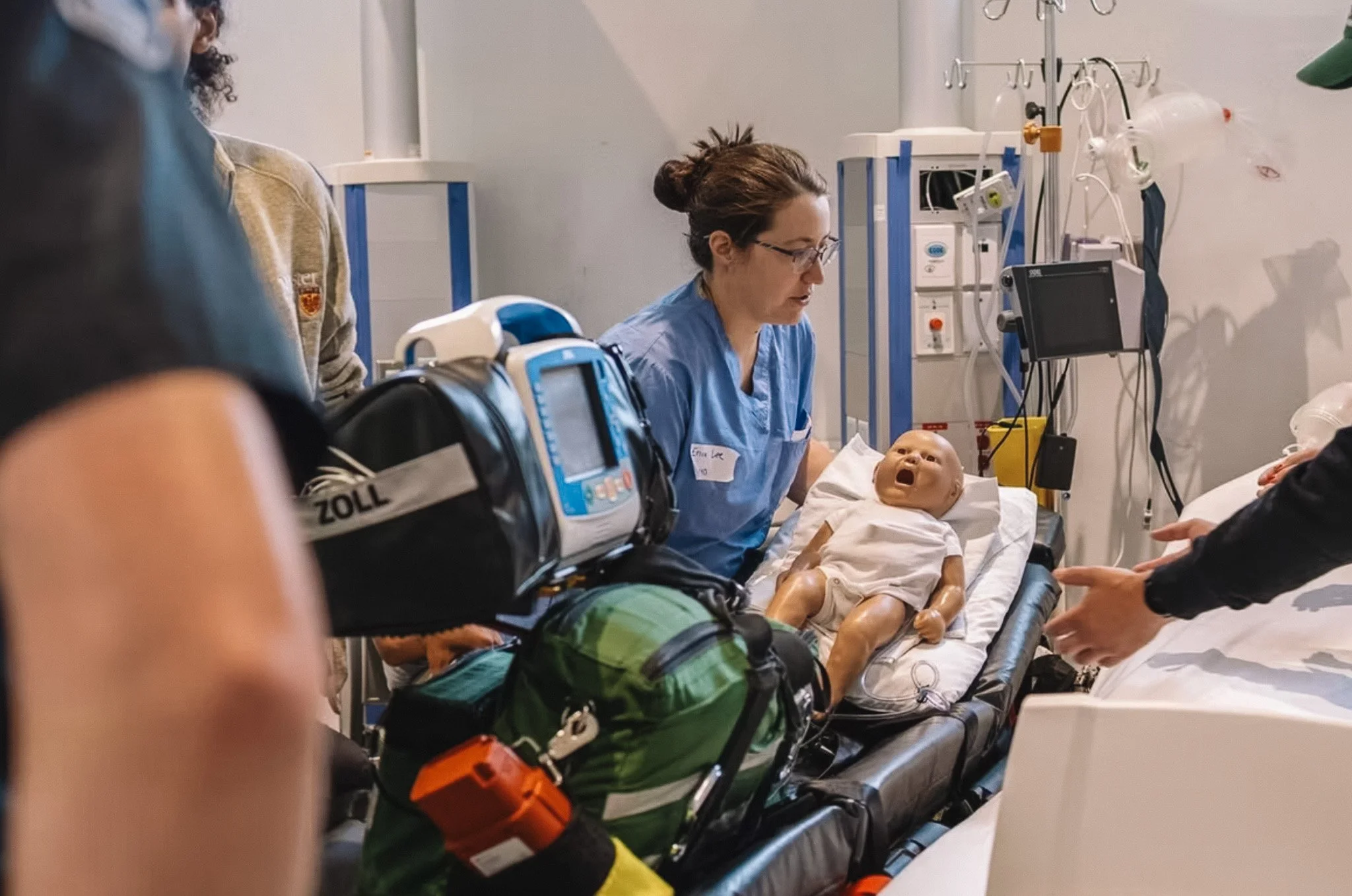
Day 1: Multiple high-acuity, in-situ scenarios tailored to your department’s workflows and requested needs (adult, pediatric, and system stress-test cases)
Day 2: Collaborative optimization workshop with physicians, nurses, RTs, educators, and leaders
Participants: Core simulation participants (~8–12 staff per group) plus rotating observers and broader ED staff engaged across the two days
Beyond the two days:
Pre-session survey distributed to all clinical ED staff to surface how frontline teams perceive resuscitation, workflows, communication, documentation, medication safety, and pediatric readiness.
Data and document review (order sets, policies, reference tools, equipment lists, staffing models) to understand your current systems before we arrive.
Post-session reporting that aligns recommendations with provincial quality frameworks (e.g., P4R, QIP, Paediatric Readiness) to strengthen both local practice and external accountability.
Cost: Starting at $20,000 + HST
THE FORMAT
Pre Session Preparation
Leadership consultation to clarify departmental priorities (e.g. pediatric readiness, resuscitation workflows, documentation, medication safety, or flow targets)
Pre-session survey distributed to all clinical ED staff to surface how frontline teams perceive resuscitation, workflows, communication, documentation, medication safety, and pediatric readiness.
Data and document review (order sets, policies, reference tools, equipment lists, staffing models) to understand your current systems before we arrive.
Analysis of survey results and documents to establish a baseline picture of “what staff say happens,” “what policies say should happen,” and “what’s actually happening”

Day 1 – Simulation & Systems Observation
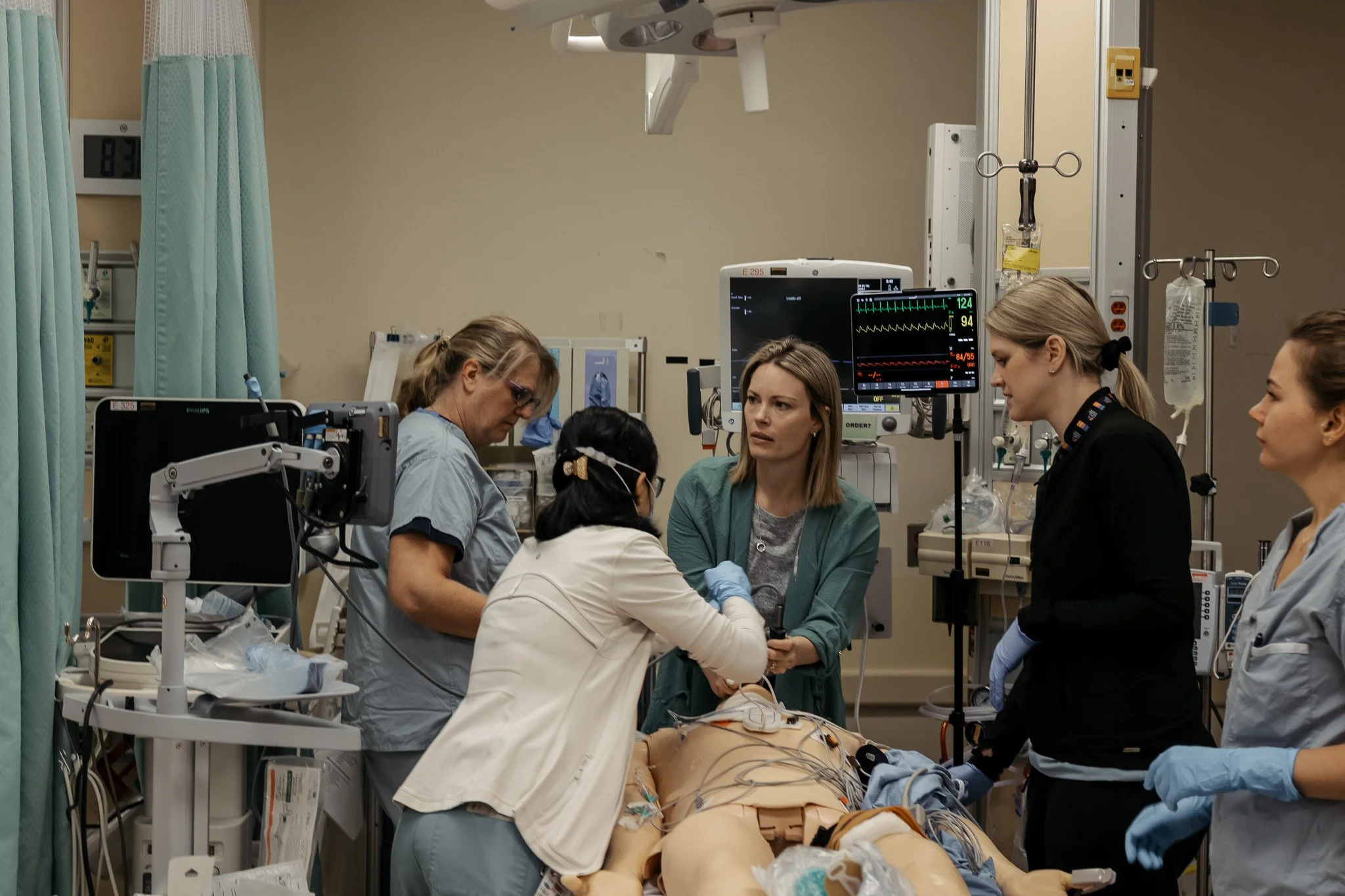
Six interprofessional, high-acuity simulation scenarios (adult and pediatric)
Structured debriefs focusing on communication, workflow, and system gaps
Real-time observation of team dynamics, decision-making, and environment
Day 2 – Critical Performance Workshop
Workflow mapping and targeted staff interviews
Identification of high-impact improvements in safety, communication, and efficiency
Interactive optimization workshop with field-tested tools and templates
Actionable, department-specific implementation plan
THE DELIVERABLES
Every engagement produces a Critical Performance Report, including:
Clear, actionable recommendations for:
Workflow & triage efficiency
Resuscitation roles, documentation, and communication
Medication safety systems
Pediatric & neonatal readiness
Environmental layout & equipment access
Embedded peer examples and best practices from other hospitals
Ready-to-use implementation tools (checklists, cue cards, workflow templates)
Recommendations in the Critical Performance Report will be explicitly mapped to:
P4R funding levers (PIA, LOS, LWBS)
QIP domains (sepsis, safety, communication, pediatric readiness)
This ensures findings can be directly integrated into your hospital’s existing quality reporting and funding structures, making them both actionable and fundable.

-
Traditional training makes individual clinicians sharper. But in real emergencies, outcomes hinge on workflow, communication, and role clarity — not just on what any one provider knows.
That’s why our Critical Performance program exists.
It exposes the gaps no policy manual or M&M review can show you: delays at triage, missing documentation, med prep bottlenecks, role confusion in codes.
It connects those findings directly to provincial priorities (P4R, QIP, Pediatric Readiness), so improvements don’t just help patients — they strengthen your hospital’s performance and funding case.
And it doesn’t stop at pointing out problems: you leave with a realistic implementation plan, field-tested tools, and a department that’s better aligned to perform under pressure.
Because in today’s ED environment, it’s not enough to train harder — you need to fix the system itself.
Critical Performance makes the whole department stronger.
-
Emergency Departments under pressure — navigating change, amalgamation, new leadership, or persistent flow challenges
Hospitals aiming to hit performance targets — improving physician initial assessment (PIA) times, door-to-antibiotic times, ED length of stay, or reducing left-without-being-seen (LWBS)
Teams struggling in high-acuity events — where role confusion, delayed meds, or poor documentation undermine resuscitation outcomes
Departments with pediatric exposure — needing confidence in low-frequency, high-stakes events (pediatric sepsis, neonatal codes) and alignment with provincial Pediatric Readiness benchmarks
Organizations looking for sustainable improvement — leaders who want more than “a training day,” and need actionable recommendations that map directly to QIP submissions, P4R levers, and funding justifications
-
Simulation + Consulting in One Program- Critical Performance pairs high-stakes simulation with structured systems consulting — producing measurable, sustainable change, not just a good teaching day.
Psychologically Safe, System-Focused- Our process is designed to encourage openness, reflection, and improvement, so staff feel safe highlighting barriers — and leaders get honest insight into where the system breaks down.
Actionable- Every engagement ends with a Critical Performance Report that maps findings directly to P4R metrics, QIP domains, and Pediatric Readiness benchmarks — so your improvements align with funding and provincial priorities.
A Comprehensive Engagement- With pre-session leadership consultations, staff surveys, data/document review, and post-session deliverables, Critical Performance is a consulting partnership — simulation is just the engine that makes it real.
FEEDBACK FROM THE FRONTLINE
Ready to Redesign How Your
ED Performs?
Turn simulation into a consulting tool that strengthens systems, improves outcomes, and aligns with provincial priorities.
Have Questions?
If you're not quite ready to book but want to connect, we're happy to help.