
Critical Ventilation:
Live Online
When the ventilator alarms go off, you’re expected to know what to do.
Mechanical ventilation is no longer rare in the emergency department. Patients remain intubated longer, support is often delayed, and the ventilator is now your responsibility. Critical Ventilation: Live Online combines the full on-demand course with a three-part live webinar series designed to sharpen your bedside decision-making under pressure.
15
Spots Available
3
Live Webinars
14
Mainpro+ Credits
$550 CAD
Investment
Course Snapshot — Cohort 2
Cohort 2 Live Sessions
Why we BUILT THIS PROGRAM
We built Critical Ventilation: Live Online because too many clinicians are put in impossible situations.
You are handed a ventilator, a crashing patient, and an expectation to know what to do, yet most of us were never properly taught how mechanical ventilation actually works in a way that translates to real bedside decisions.
It does not matter whether you work in a tertiary ICU or a small rural emergency department at two in the morning. Without a clear framework, the ventilator becomes a black box. That gap leads to hesitation, stress, and unnecessary risk.
Critical Ventilation: On Demand gives clinicians the structure and logic to manage ventilated patients safely and confidently. The Live Online program adds the missing piece: required live reinforcement through real-time demonstration and case-based troubleshooting, so the knowledge becomes usable under pressure.
Our goal is simple: to make sure you never feel unprepared when you are the one standing at the bedside.
WHO IT’S FOR
This program is designed for US physicians who manage ventilated patients and need a clear framework that translates to frontline care, including:
Emergency Medicine physicians
Physicians working in community and rural hospitals
Clinicians who manage ventilation without immediate RT support
Clinicians responsible for both adult and pediatric respiratory failure decisions
ACCREDITATION AND CME
This activity has been certified by the College of Family Physicians of Canada for up to 2.0 Mainpro+® Certified Activity credits per 2 hour session. The course is 14 hours total and participants are therefore eligible for up to 14 Mainpro+ Certified Activity Credits.
Recordings may be provided for review, but recordings do not replace live participation for claiming the full 14 credits.
Physicians should claim only the credit commensurate with the extent of their participation in this activity.
what’s included
Participants receive immediate, 2-year access to our online course, Critical Ventilation: On Demand, upon registration, along with access to our live, 2-hour monthly webinar series.
These two components are designed to work together.
The on-demand course builds the core framework for ED ventilator, NIV, and HFNC management at your own pace.
The live online sessions then build on that foundation, reinforcing key concepts through real ED cases, troubleshooting, and applied decision-making.
Learners complete sections of the on-demand material first, then deepen and consolidate that knowledge during the live sessions.
on Demand series

9 online modules
6 hours
2-Year Access (including course updates)
8 Chapters. 48 lessons.
Start and stop whenever you want
“Vent Logic” clips connecting vent function to core physiology
Downloadable setup & troubleshooting guides
Assigned readings from our Critical Ventilation Manual (© 2025)
Step-by-step videos filmed on real
equipment (Hamilton T1/C1 and Airvo2 HFNC)
COURSE MODULES:
-
Introduction to Critical Ventilation: On Demand
Critical Ventilation Online: Foundations of Emergency & Transport Ventilation
-
Video on Ventilation Foundations
Quiz
-
Introduction (Video)
Circuit Setup (Video)
Quiz
Circuit Checks (Video)
Quiz
Securing the ET Tube (Video)
Circuit Setup: The Distal End (Video)
Suctioning (Video)
-
Video
Quiz
-
Introduction (Video)
Basic Ventilator Settings and Pressure Control (Video)
Quiz
Case: Initiating Pressure Control Ventilation
Case Quiz: Initiating Pressure Control Ventilation
Pressure Regulated Volume Control (PRVC) (Video)
Quiz
Case: Initiating Pressure Regulated Volume Control
Case Quiz: Initiating Pressure Regulated Volume Control
-
Video
Quiz
-
Video- HFNC
Quiz
Video- BIPAP
Quiz
-
Introduction
BiPAP Setup (Video)
Quiz
Case: Initiating BiPAP
Case Quiz: Initiating BiPAP
HFNC (Video)
Quiz
Case: Initiating HFNC
Case Quiz: Initiating HFNC
-
Introduction
High Airway Resistance/Bronchospasm (Video)
MDI Administration (Video)
Quiz
Case: COPD Vent Initiation
Case Quiz: COPD Vent Initiation
Poor Lung Compliance/ARDS (Video)
Quiz
Case: ARDS
Case Quiz: ARDS
Severe Metabolic Acidosis (Video)
Quiz
Case: Metabolic Acidosis
Case Quiz: Metabolic Acidosis
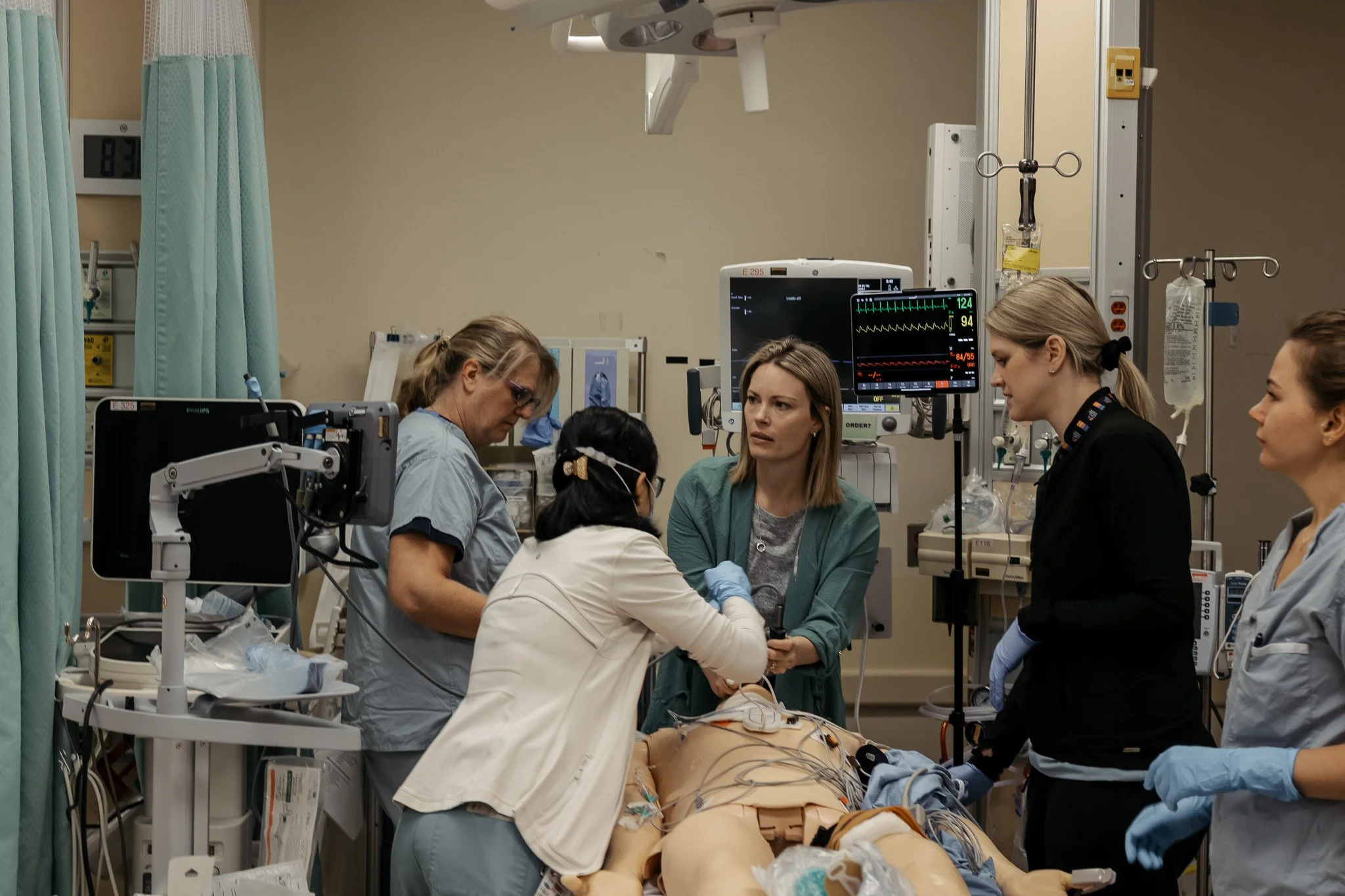
LIVE WEBINAR SERIES
The live webinars build directly on the on-demand course, focusing on real-time application and case-based teaching. These sessions are designed to reflect what actually happens on shift.
-
A case-based, step-by-step walkthrough of the first minutes of mechanical ventilation in the emergency department. This session focuses on the transition from effective BVM ventilation to safe ventilator setup, early waveform interpretation, and immediate troubleshooting during the highest-risk phase of care.
Learning Objectives
By the end of this session, participants will be able to:
Review and apply core principles of mechanical ventilation, including oxygenation, ventilation, and lung protection, and describe how these guide initial ventilator setup in emergency settings.
Demonstrate effective bag-valve-mask (BVM) technique, including seal optimization, ventilation timing, use of PEEP, and strategies to avoid air trapping.
Perform a structured, stepwise ventilator setup for emergent intubation, including mode selection (PRVC, VC, PC), initial parameter selection, and correct assembly and connection of the ventilator circuit.
Interpret essential ventilator waveforms (pressure, flow, and volume) to assess patient ventilator interaction and recognize early signs of obstruction, poor compliance, auto-PEEP, or dyssynchrony.
Identify and troubleshoot common early ventilator alarms using a systematic bedside approach.
Apply a case-based approach to transitioning from BVM to intubation to ventilator support, integrating assessment, waveform interpretation, and real-time adjustments in a rural or resource-limited ED environment.
-
Rapid-Fire Troubleshooting, Physiology, and Complex Vent Scenarios
A case based, high-yield troubleshooting session built around rapid cases that reflect what actually happens on shift. This webinar focuses on waveform interpretation, resistance versus compliance problems, safe minute ventilation adjustments, and decisive intervention during deterioration.
Learning Objectives
By the end of this session, participants will be able to:
Identify and troubleshoot common post-intubation ventilation problems, including mucus plugging, endotracheal tube kink or obstruction, cuff leak, right mainstem intubation, high-resistance states, and pneumothorax.
Interpret abnormal ventilator waveforms to distinguish between resistance and compliance problems, and select appropriate interventions.
Calculate current and desired minute ventilation using structured formulas to guide safe adjustment of tidal volume and respiratory rate in conditions such as opioid overdose, metabolic acidosis, and neurologic injury requiring targeted PaCO₂.
Apply physiologic principles to guide ventilator changes in complex acid-base disorders, including intentional hypoventilation in metabolic alkalosis and controlled hyperventilation strategies for elevated intracranial pressure.
Recognize clinical deterioration on the ventilator and intervene appropriately, including when to shorten inspiratory time, when to reduce respiratory rate to prevent auto-PEEP, and when to disconnect and manually decompress the chest.
Use a systematic, case-based reasoning approach to rapidly interpret ventilator feedback, respond to alarms, and make safe, effective bedside adjustments during emergent scenarios typical of rural and community ED practice.
-
A cased-based session covering pediatric ventilation fundamentals plus structured non-invasive respiratory support. This webinar focuses on safe initial setup, common pediatric pitfalls, and clear escalation frameworks for HFNC, BiPAP, and intubation in both adult and pediatric patients.
Learning Objectives
By the end of this session, participants will be able to:
Describe key physiologic differences between pediatric and adult patients and explain how these differences influence ventilator setup.
Select appropriate initial ventilator settings for infants and children, with a focus on pressure control ventilation, short inspiratory times, and age-appropriate respiratory rates.
Recognize and troubleshoot common pediatric ventilation problems.
Initiate and titrate High-Flow Nasal Cannula (HFNC) in both pediatric and adult patients, adjusting flow and FiO₂ based on work of breathing, oxygenation goals, and patterns of response.
Set up and optimize BiPAP, choosing appropriate IPAP, EPAP, and delta pressure for conditions such as SCAPE, COPD exacerbation, pneumonia, and mixed respiratory failure.
Identify early signs of non-invasive ventilation failure and determine when escalation to intubation is required.
Apply a structured escalation framework (HFNC to BiPAP to Intubation) using case-based reasoning and live ventilator demonstration to guide real-time decision-making in emergency and resource-limited settings.
Live Webinar Dates
COHORT 2:
Webinar 1: October 19, 1900-2100 EST
Webinar 2: November 23, 1900-2100 EST
Webinar 3: December 14, 1900-2100 EST
Critical Ventilation: Live Online gives you the structure, reasoning, and real-time reinforcement needed to manage mechanical ventilation, NIV, and HFNC safely — even when support is limited and the pressure is high.
Build confidence in your ventilator decisions, reduce cognitive overload during resuscitations, and gain a clear framework you can apply immediately on shift.
All while earning up to 14 Mainpro+ Certified Activity Credits through a cohort-based program designed for real-world emergency care.
investment: $550 CAD
READY TO manage your next vented patient with confidence?
Sharpen Your Edge
Want to build confidence under pressure? Explore our upcoming open-access sessions and reserve your spot.
STAY IN THE LOOP
Not ready to register yet? Join our mailing list and be the first to know about upcoming courses and new training opportunities.